

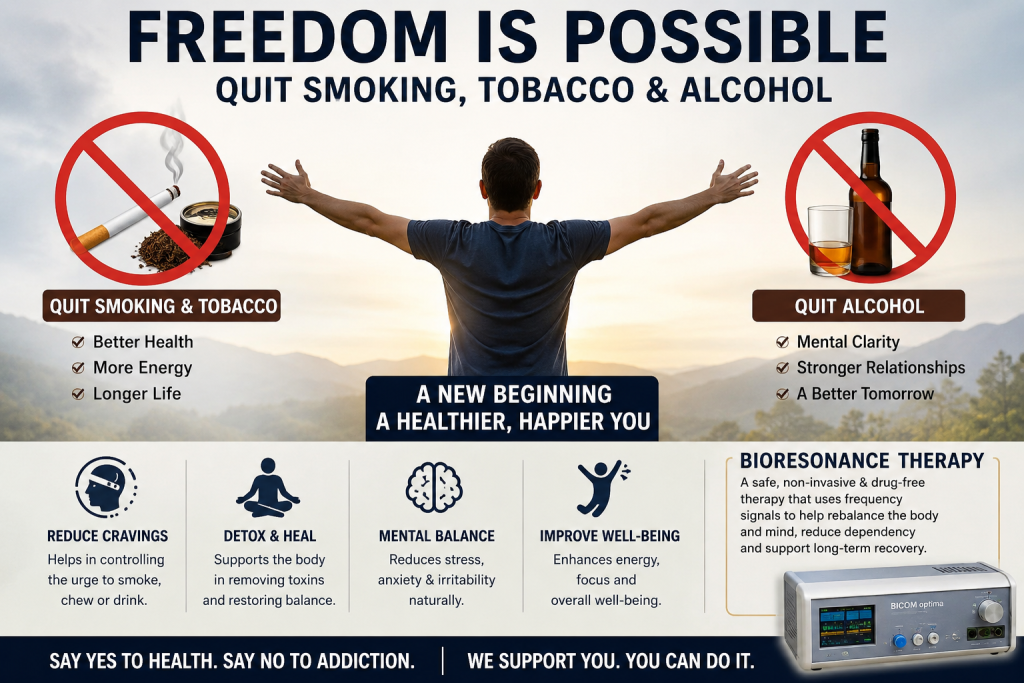
Bioresonance for smoking & chewing tobacco
Some practitioners offer bioresonance sessions with the goal of:
- Reducing nicotine cravings
- Helping manage withdrawal-related discomfort
- Supporting behavioural change
- Reducing the desire to smoke cigarettes or use gutkha, khaini, zarda and other chewing tobacco
- Providing relaxation and motivation during a quit attempt
However, there is not good-quality clinical evidence establishing bioresonance as an effective treatment for nicotine dependence. It should therefore not replace proven tobacco-cessation approaches such as behavioural counselling and approved medications.
Bioresonance for alcohol dependence
Bioresonance may be marketed as a complementary approach for:
- Reducing alcohol cravings
- Supporting motivation to stop drinking
- Promoting relaxation
- Supporting a person’s recovery programme
However, bioresonance should not be presented as a treatment that detoxifies the body or cures alcohol dependence. Most importantly, someone who is physically dependent on alcohol may experience dangerous withdrawal if they stop suddenly. Medical assessment and supervised withdrawal may be necessary.